Why we need hyper local community emergency plans now

As well as the known and growing risks of climate change – flooding, extreme weather, wildfires etc, we also know that there is a growing risk of food insecurity due to biodiversity loss and global events (such as wars/armed conflict).

The physical effects of climate change events are often localised and will mostly be dealt with by local emergency services and local authorities – local emergency community plans can help by identifying vulnerable people, assisting with evacuations (where necessary) and helping with recovery.

The National Audit Office Risk Register (2025) identifies a number of significant to moderate risks which would likely affect the whole of the UK’s infrastructure – including any communications and services using digital technologies – which is most of them – including emergency services. In these events a hyper local community emergency plan is a vital tool in enabling analogue communication, social cohesion and collaboration that may mitigate vigilantism, organised crime and opportunist profiteering.

Many of the longer term impacts (although for biodiversity cascade risks the National Security Briefing predicted some as soon as 2030 a mere four years away) may be slower acting – ie shortages of foods may be gradual rather than sudden – but the main risk identified (beyond eventual starvation/malnutrition) is societal collapse. Could this be mitigated by better community cohesion and collaboration that is specifically targeted at working together to come through difficult times?

The NAO Risk Register also identifies community response as important:

“For communities, a ‘whole-of-society’ approach to resilience means that where possible, communities recognise their role in, take responsibility and contribute to the UK’s resilience.

Successful community resilience approaches are often based on connection and relationships. Deepened partnerships between statutory responders and the communities they serve can provide benefits and positive outcomes during emergencies, such as an increased understanding of needs in the community, public confidence and motivation to act, and better coordination and integration of collective capabilities to prepare for, respond to and recover from emergencies.”

“When emergencies happen, people often feel compelled to help. Professionals and volunteers train for emergencies, but other members of the community can also be involved through acts of good neighbourliness and spontaneous volunteering. Bringing people and organisations together to form effective networks is key to building community resilience, preparing for emergencies, and making the best use of all available resources. If the worst happens, members of the public can often rally their skills and resources to help their community. No matter who wants to help, what abilities they have, or whether they have volunteered previously, there may be ways for them to help. Even if people feel motivated and able to help, in many cases it is best not to just turn up at the scene of an emergency and begin working. This could be dangerous and overwhelm the emergency services. Instead, it is best to get involved via the structures that have been established in the local area, so everyone can work safely for the benefit of those who need help. This means looking out for calls for support from a local authority, or national and local charities and, most importantly, performing essential acts of good neighbourliness.”

What is already there?

As they say “it is best to get involved via the structures that have been established in the local area” – finding what those structures are, if they even exist, has proved to be a difficult thing (in my town – Maidenhead).

Local Resilience Forums, hold the Community Risk Register and plan but are not that local. They mostly operate at county level or in the case of Thames Valley Resilience Forum the borders match those of Thames Valley Police and cover an area of the 2,200 square miles of Berkshire, Buckinghamshire, Oxfordshire, and Milton Keynes.

The Communities Prepared organisation – that lists local resilience groups (and is signposted to from the Government’s Prepare Campaign website) shows that there are no such groups in the East Berkshire area and only one along the length of the River Thames, even in parts that regularly flood.

Although not updated since 2019 (ie pre pandemic) the Government’s ‘Community Resilience Development Framework’ will prove useful in setting up Hyper-local Community Emergency Planning Groups.

The Communities Prepared website also hosts a useful toolkit – designed for London but adaptable to most localities: https://www.communitiesprepared.org.uk/london-community-resilience-toolkit/.

What do I mean by hyper-local emergency planning

Hyper-local is an area no bigger than a local authority/parliamentary constituency ward but likely much smaller – potentially the size of an electoral/polling district in less densely populated areas and more likely the size of a Neighbourhood Watch area in more highly populated areas. It could be a single housing estate or block of flats or a single road.

The emergency planning part would involve people in that area forming a resilience group (or an existing group taking on the task – for example Neighbourhood Watch, Resident’s Association, etc) coming together to formulate a plan that would help to identify vulnerable and other people in need of support during a range of emergency scenarios and also identify local resources (people with skills, equipment, supplies, shelter, etc) that might be needed or helpful. It would also form links with other such groups in the area and with other local organisations involved in emergency planning (eg local authority, emergency responders, local resilience forum etc).

How can we make it happen/make more of it happen

Communications campaign to encourage people to set up local resilience groups and create hyper-local community emergency plans.

Convene, connect, host meetings of relevant partners eg:

  • Schools
  • Places of Worship / Faith based organisations
  • Sports and social clubs
  • Voluntary organisations such as Rotary Club, Lions etc
  • Local political parties
  • Parish Councils
  • Neighbourhood and Resident Associations
  • Primary Care organisations
  • Social care organisations
  • Care homes/Residential homes
  • Local businesses
  • Neighbourhood watch
  • Existing resilience groups
  • Flood wardens
  • Other relevant local organisations
  • Representatives of local emergency services
  • Interested individuals

Objectives:

Sign up to be part of the development of local groups and local plans.

Identify and create ward level groups (and then recruit at a local level for smaller groups). Within those groups identify a lead co-ordinator.

Create action plans using the toolkit available from Communities Prepared.

Communications:

This is not about frightening people with even more bad news. This is about providing solutions and showing people the strength that already exists within their communities. Once we start to bring people together to think about needs and solutions it becomes clear that within each community we have much of what we need. An example from a group coming together in London – one of the group leads spoke to the owner of a Funeral Directors – they of course offered themselves as a source of body bags and as a mortuary (should such a need arise), but they hadn’t realised – until the group lead pointed it out – that they also had personnel who were trained and experienced in helping people through grief and trauma and that in an emergency with mass fatalities those ‘soft’ skills would be just as vital as the material resources they could offer. In order to have community resilience we must have resilient communities – that identify themselves as a community, that care about the people and place they live in. Some of the work that needs to be done in preparation for any emergency – large or small – is to bring those communities together as an active, everyday force for good.

Current communications around emergency planning focus on the needs of the individual – having 72 hours of food etc – but not everyone has the means to do this – prepping is privilege. That doesn’t mean we shouldn’t do it but we should be prepared to make our resources into community resources and share what we have. Together we can have enough.

There has been much commentary on the rise of depression and anxiety diagnoses and whether this is being over diagnosed. What politicians do not ask themselves (it seems) is whether they have something to do with this. Depression and anxiety seem to me to be entirely sane responses to the world we are living in: climate emergency, biodiversity emergency, political upheaval, war, pandemics, the rise of AI and the risks of technology dependence. To have concerns about all of these things is understandable. What we don’t have is clear directions to the emergency exit, or where the first aid kit is stored or how to put on our lifejacket and find our lifeboat. In most circumstances in our lives where risk is identified – travelling by boat or air for example – we are directed to what to do in an emergency – even if that emergency is unlikely or remote we know that there is a plan and that is reassuring. So, creating hyper local emergency plans that involve everyone in the community may also help to allay some of the anxiety people feel about these future threats – it isn’t going to solve everything but it is something.
Posted in Uncategorized | Tagged , , , , , , , , | Leave a comment

Putting the Art in CathARTic

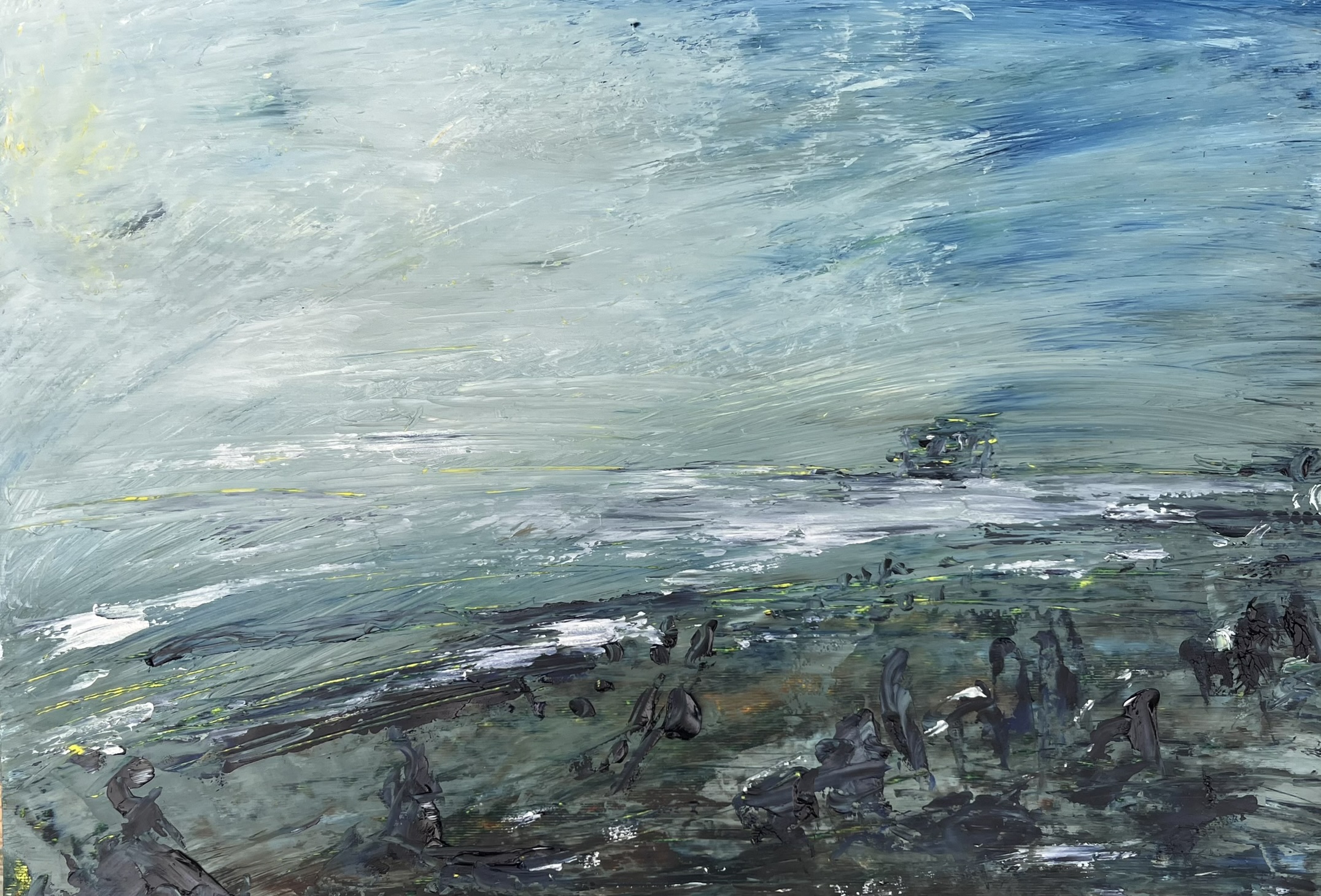
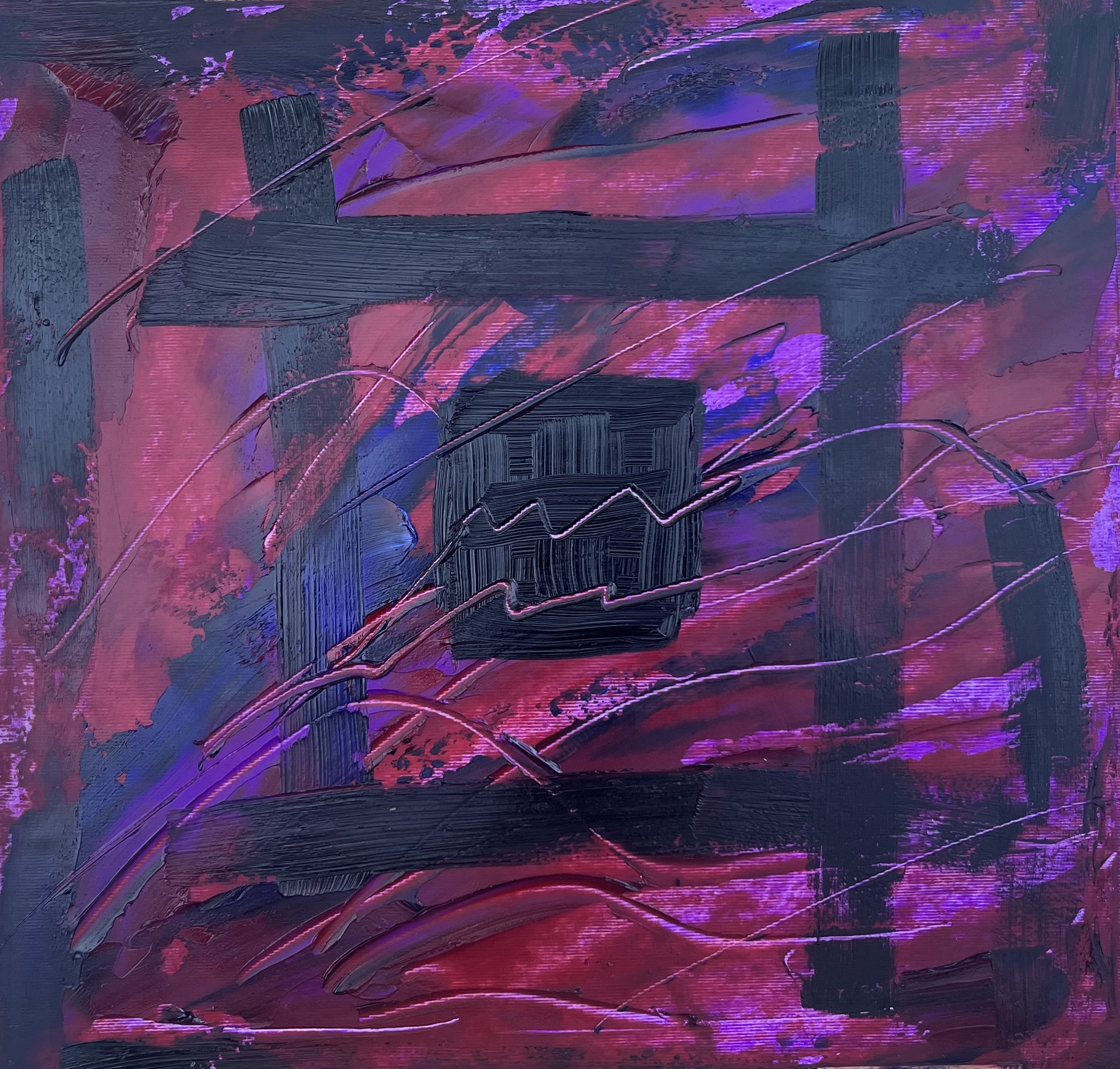
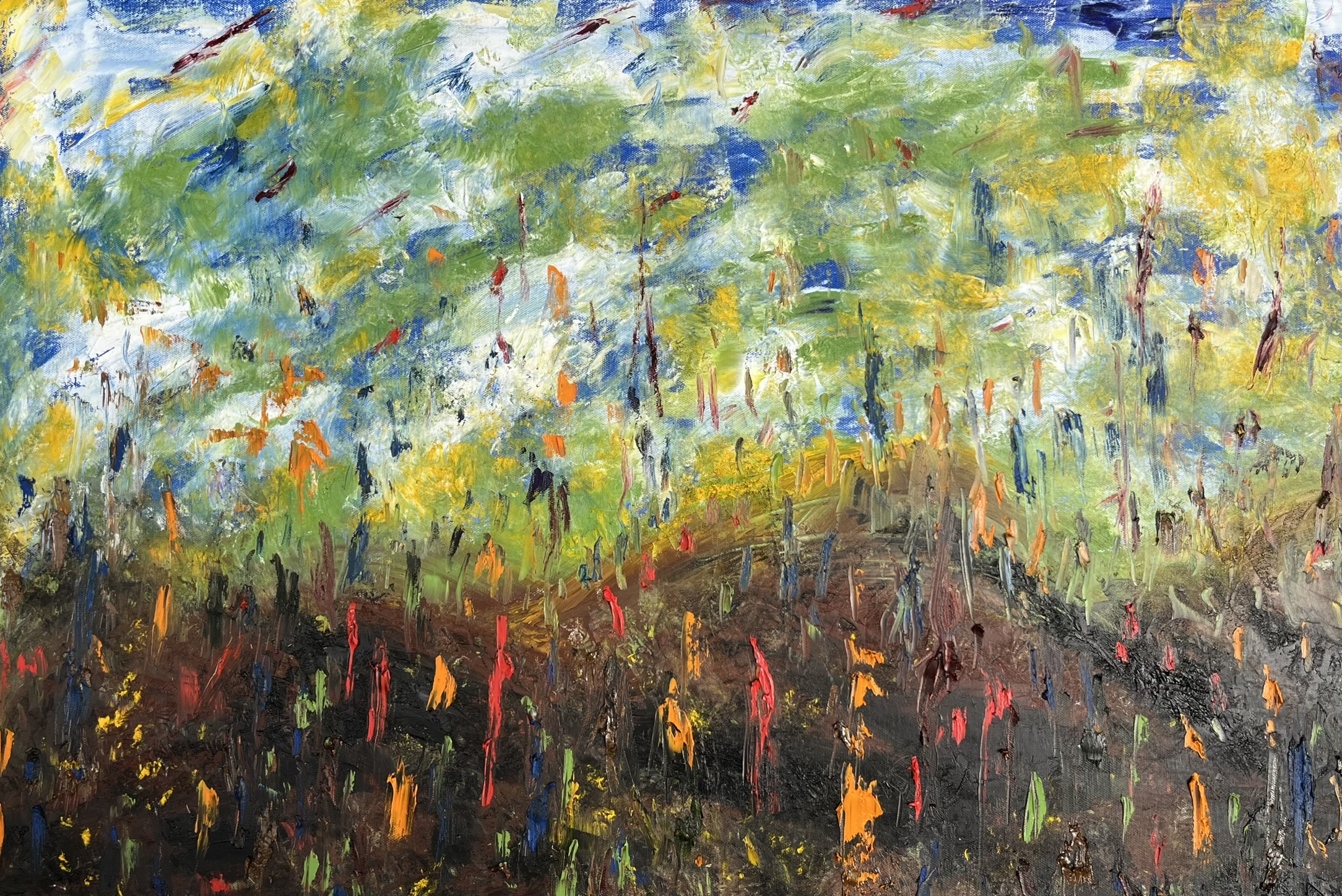
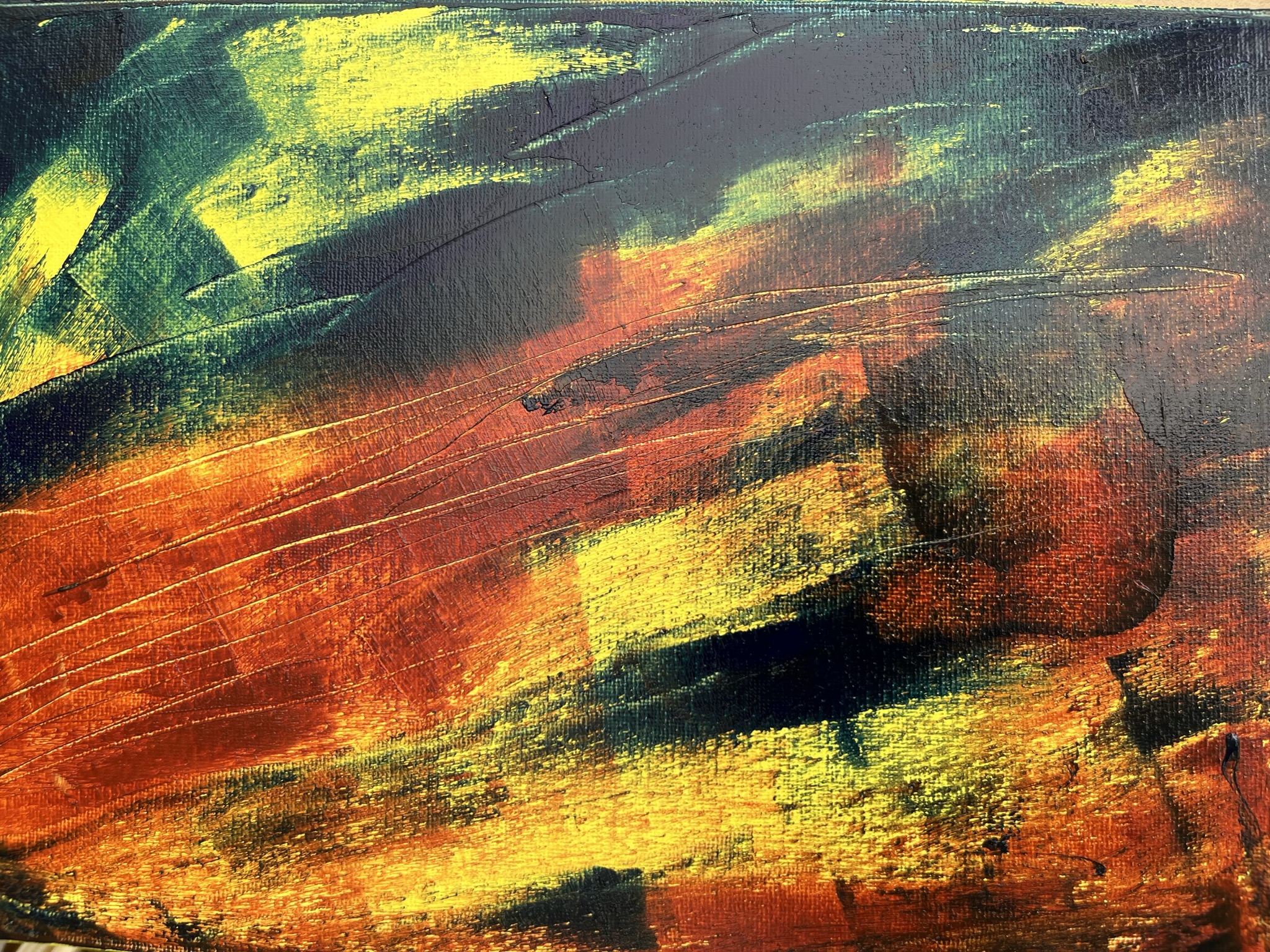
The last 12 or so months have not been easy. In September 2023 I lost my beloved dog Mavis to kidney disease. Barely a month later my (then) 98 year old mother fell over at my sister’s flat in Devon and broke her pelvis. Her bones have healed but her mind and body have not and she is now pretty much bed-bound and needs constant care. We have carers 4 times a day but that still leaves twenty one and a half hours where it’s down to me (and my sister most weekends). It has been stressful. In March this year I decided I really needed a dog in my life and along came Bertha from Battersea. She’s pretty scared most of the time and needs a lot of love and patience. To cope with all of this I’ve turned to oil paint. This is a medium that I haven’t really used since the 90s but somehow felt right for my state of mind. I moved from abstract to landscape and I’m still working on it – but here is a selection of work in progress.

To view the images full size and correct orientation click on any image and scroll through

Posted in Uncategorized | Leave a comment

100 Portraits in 50 hours – yes I did it!

So the 50 hours are up – and yes I completed 100 portraits.

Thanks to everyone who sat for me, on zoom and in person, and to everyone who sent in pictures of themselves, loved ones and beloved pets. Also to everyone who sponsored me – thank you.

You can see all the portraits here https://debdavemason.com/100-portraits-in-50-hours/

If you’d like to donate you can do so here

Here’s some of my favourites

Posted in Uncategorized | Leave a comment

#100Portraits50Hours – a drawing marathon

Examples of the type of portraits I’ll be creating

Yes, it has begun!

My drawing marathon challenge for the Captain Tom 100 Challenge. Over the course of this weekend (Friday 30th April to Monday 3rd May) I plan to complete 100 portraits in 50 hours. That means drawing for 12 to 13 hours a day. I love drawing but that’s still a lot of work for brain and hand. I’ve bought a splint for my right hand – unfortunately brain splints are not available!

Subjects will be coming to sit in person (socially distanced) in my driveway, in person online (via zoom etc) and I will also be doing some portraits from photographs submitted by email. I’ve got more than 100 subjects lined up – just in case someone drops out at the last minute or calls off due to rain.

I’ll be posting the results on my twitter and instagram feeds @DebDaveMason (don’t worry I’ll be taking a break for the Line of Duty finale!)

Why am I doing this crazy thing (ask my dog, my mother and my sister)? It’s for a very worthwhile charity. I work for Magic Me two days a week and it’s more than a job, it’s a brilliant charity doing work that is so vital right now.

What actually is that work you ask? Magic Me specialises in intergenerational arts activity bringing younger and older people together for mutual benefit, learning and enjoyment. Based in Bethnal Green they work with people in Tower Hamlets, Waltham Forest and Essex.

Through 2020/21 all through the various lockdowns, their At Home Together programme reached 350+ people and worked with 19 partners organisations. Magic Me has continued to serve vulnerable isolated individuals, and people living in sheltered housing and care homes, they have managed to keep school pupils and older people connected, through remote activities.

The pandemic has exacerbated issues which already impacted older east Londoners: social isolation, overstretched care system, racial injustice, digital poverty. The latter two of these also affect many of the school children the charity works with and they have also been impacted by isolation and loneliness when school lockdowns mean they can’t meet up with their friends.

Magic Me receives no core funding from central Government. Every penny of staff salaries, overheads like rent and utilities, online services such as zoom etc, have to be fundraised from scratch year on year. Each project is funded separately and can only go ahead when budgets are met. The pandemic has brought additional challenges not just to delivering the kind of work Magic Me does, but also to raising the funds to do it.

Please do make a donation to my fundraising page here and help Magic Me do more of its wonderful work.

Virgin Money Fundraising Page

If you would like to find out more about Magic Me you can:

Visit the website www.magiceme.co.uk

Sign up for the monthly newsletter

Follow on Twitter, Facebook and Instagram

If you have other ideas about how you can support the charity contact me there at deborahmason@magicme.co.uk

Posted in Uncategorized | Leave a comment

100 Portraits in 50 hours – my craziest fundraiser yet!

So… as you know I like a challenge. Especially a fundraising challenge. And I’m once again raising funds for the awesome Magic Me.

Over the weekend of 30 April to 3 May I’m going to try and complete 100 portraits in 50 hours.

I’m going to need subjects, I’m going to need sponsors. They might be the same people, they might not!

You don’t need to sponsor me to have a portrait done and you get the portrait as a thank you for helping me get to my goal of 100 portraits in 50 hours.

Sponsorship is of the activity itself (like sponsoring a marathon) – and you don’t have to have a portrait done to sponsor me – Magic Me is a brilliant charity so your money will go to a great cause.

HOW TO GET A PORTRAIT DONE – 3 DIFFERENT OPTIONS

3 ways to get a portrait done – it can be of you or a loved one (human or pet!)

In person over zoom/meet/teams

Use the form below to book a 30 minute slot – you won’t need to sit completely still but wriggly children, pets etc might be best done from a photo!

If there is more than one of you please let me know when booking and book continuous slots for each person – so for 2 people it might be 10am and 1030am, for 3 it might be 10am, 1030am, 11am – if you can’t find the right slots let me know and I can hopefully shuffle things about.

In person in my front garden in Maidenhead

Use the form below to book a 30 minute slot – you won’t need to sit completely still but wriggly children, pets etc might be best done from a photo!

If there is more than one of you please let me know when booking and book continuous slots for each person – so for 2 people it might be 10am and 1030am, for 3 it might be 10am, 1030am, 11am – if you can’t find the right slots let me know and I can hopefully shuffle things about.

My house is in Ray Park Avenue, there are usually places to park nearby on the road – I’ll send the exact address once I’ve received your booking.

Booking form for the in person options here:

https://docs.google.com/forms/d/e/1FAIpQLSf2aRsmBuZYPkgXZ6VVMKLSbd7-3hRfck9fQgIPDPaeLQbZrA/viewform?usp=sf_link

Send a photo (or more than one)

You don’t need to book a slot for these, I’ll fit them into any empty slots in the timetable (or do them at unsocial hours early in the morning or late at night if necessary). Please send photos through as soon as possible and by 6pm on 2nd May 2021 at the latest.

All you have to do is send the photo to me here hashtagcollage@gmail.com

HOW TO SPONSOR

Magic Me is a brilliant intergenerational arts charity helping to combat social isolation and loneliness in one of the UK’s most deprived areas. You don’t have to sponsor me to have a portrait done but if you’d like to you can make a donation here: https://uk.virginmoneygiving.com/DeborahMason7/1

WHAT DO YOU GET – WHEN DO YOU GET IT?

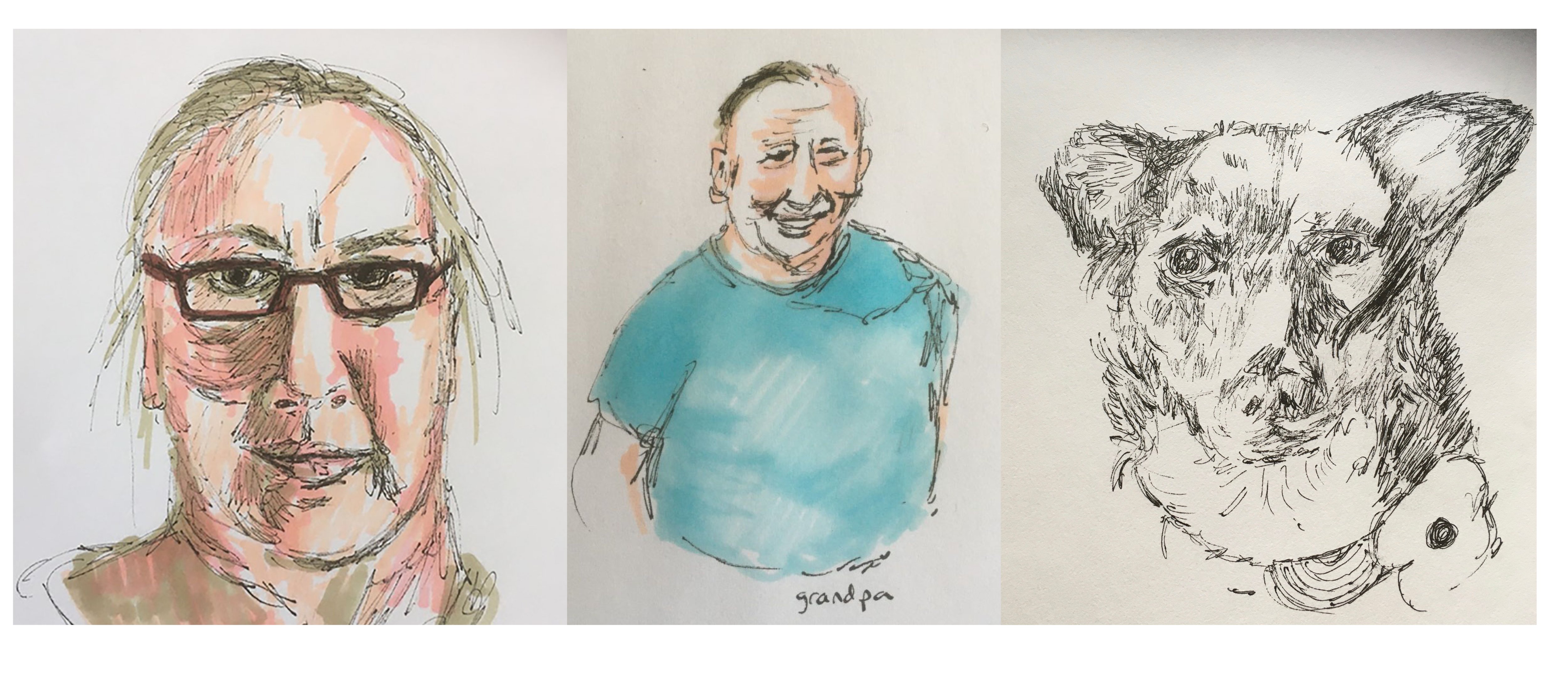
The image above is the style of portrait I’ll be doing – for 20-30mins anything other than pen and ink is a bit too much of a challenge. Most individual portraits will be A5 size (about the size of an exercise book), group portraits will be A4 size (about the size of a magazine).

The challenge period between 30 April and 3rd May will be pretty intense – I’ll be working 12.5 hours a day to complete the challenge. I’ll be taking quick snaps of the portraits and sharing as I go (I won’t share anyone’s name – just the number of the portrait and the image).

Once the challenge is over I’ll scan each portrait to a high quality jpeg and send this through to you. This might take a little while but I hope to have this done by the end of that week. If you like the portrait and would like the original just let me know, with a postal address, and I’ll post it out to you.

Image shows: three images next to each other left to right: a pen and ink portrait of a middle-aged woman with a pink face, glasses and hair pulled back, an old man in a blue shirt smiling, a black and white drawing of a dog’s head, the dog is wearing a poppy on her collar.

Posted in Uncategorized | Leave a comment

Why my pub won’t be closing its doors….

Why my pub won’t be closing its doors

On a Friday night, eight years ago, I was home drinking wine, sitting on the sofa ‘chatting’ to friends via Facebook. Someone, it might have been me, it might not, said ‘this is like a virtual pub’. This tickled my imagination and that of my friend, Liz Steer, so we set up the Sofa Arms. As a Facebook group with multiple admins people could invite their own friends down the pub and chat amongst themselves or the other regulars. It was those regulars that really made the pub work. They didn’t all know each other but many were connected by being disconnected. Isolation and social distance aren’t new. Many people become isolated at different points in their lives, parents of new babies and young children, people with long term illness or disability, or those temporarily disabled by injury or disease. One of our most ebullient regulars is an archaeologist who spends nearly every summer on digs in remote parts of Turkey, for her the Sofa Arms was a little taste of home and a place to unwind and be silly.

I’m not sure how I ended up by being landlady (how Liz got away with not) but I never thought the Sofa Arms would still be going strong. Recently we’ve been very busy. In fact we haven’t been this busy since the London Riots in 2011. This is not surprising, suddenly everyone is feeling isolated, disconnected and also in need of a bit of silliness. Our current isolation and social-distance comes with a big hint of ‘death’ and I think that is driving people to find distractions. On Friday we experimented with our first live Happy Hour via Zoom. Not without its technical glitches but patrons are keen to give it another ago and are already talking about pub quizzes and play readings, a poetry night is currently scheduled for Monday. But it is about more than social interaction.

The popularity of the pub is down to the regulars and their collective imagination and creativity. They have created the pub and all its fabulous features. They have made for themselves and for others the comfort of a perfect place – a pub-topia – where the loos are always clean and stocked with loo roll, where every kind of food and drink is available. Long running imaginative threads have woven the pub into a kind of shared reality. There are rogue camels that sometimes, ineffectively, serve behind the bar, there is a Colin Firth look-a-like waiter, a Pimms fountain, the heating for the Winter Bar is provided by mulled wine running behind the wainscoting which can be sampled from small brass taps set into the panelling. The games room is big enough for jousting and has also hosted Zumba. Mrs Thinge the cleaner has had much written about her and has emerged as a character somewhere between Mata Hari and Flash Harry.

Dropping into the Arms is about dropping into a nicer world, one that is fun and easy, away from all crises. Although it does provide a place for social connection I think it is that shared vision of a good place to be that will keep it open for the duration. I work for the charity Magic Me, our director recently wrote a blog about ‘Where we are today’ her final lines really resonate with me and I’m planning to have them painted above the door to the Ladies’ Snug:

“Solutions will be found, creativity will flourish, people will connect”

Posted in arts | Tagged , , | 2 Comments

Frankenheights

I had for some time considered the parallels and similarities between Emily Bronte’s creation ‘Heathcliffe’ and Mary Shelley’s ‘Creature’ and how ideas of revenge drive forward the plots of both Wuthering Heights and Frankenstein. Modern interpretations of both often try and force a romantic plot line onto these works, rather than a Romantic one. In both cases an abandoned child grows up alone, any love or comfort is fleeting and often quickly taken away by fate. Each character grows embittered and determines to take revenge, unlike the Count of Monte Cristo (fairly contemporary to Wuthering Heights) who takes very specific revenge on each of the people who wrong him, these characters take revenge that although directed at one person is a revenge on the whole world – it is savage, raw, visceral.

It made me wonder about the authors, whether these characters were outlets for their own feelings of abandonment (both had mother’s who died young and father’s more concerned with philosophy and theology), the pain of their own loss of children, siblings, loved ones.

In my one off book I imagine a narrative for Frankenstein that tells the story from the Creature’s perspective and pulls out the similarities with Heathcliffe on one side and on the other is a series of visual thoughts about the relationship between Emily and Mary, between Mary and Percy and Byron and about women repressing their raw emotions and putting them into their art.  The design of the book was inspired by a facsimile of a German children’s book that has cut outs through the middle of the pages and a zig-zag fold out page formation that allows you to rearrange it so you can create different through views. This seemed to me the perfect vehicle for interpreting a classic novel – one that has gathered many different viewpoints and interpretations over the years.

The book was exhibited at the Liverpool Book Art Fair in 2018. The exhibtion was themed to celebrate the 200th anniversary of the publication of Frankenstein.

Posted in Uncategorized | Leave a comment

Creative projects update

Taking stock as the seasons turn I’ve updated various pages on this site and added lots of pictures and media!

26-1

26 first draft

You can catch up with my Artist in Residence in My Own Street project here

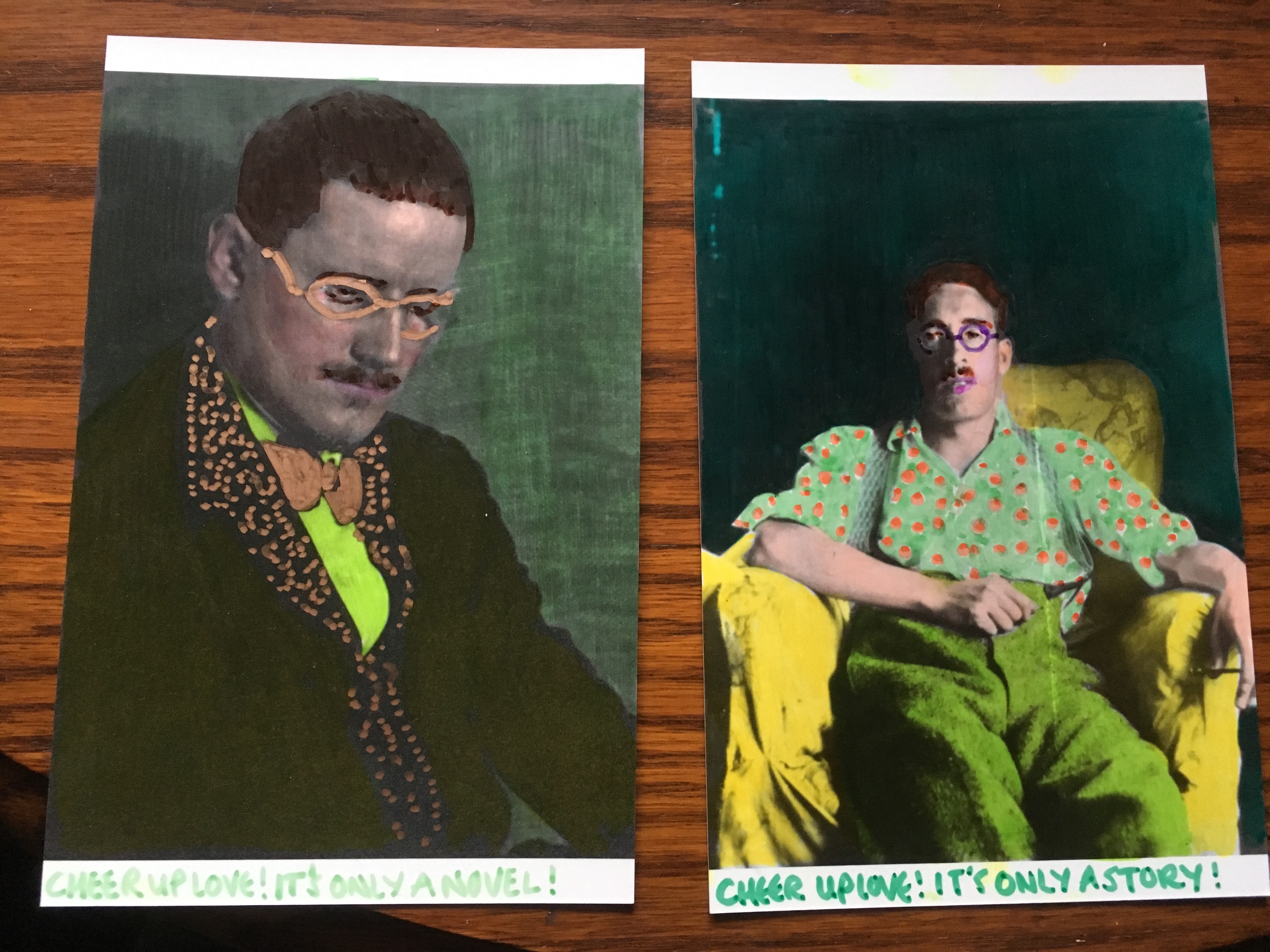
Find out about my Cheer Up Love! project here

IMG_2602

And watch this space for my 365DaysofMum project.


Posted in Uncategorized | Leave a comment

Spooky

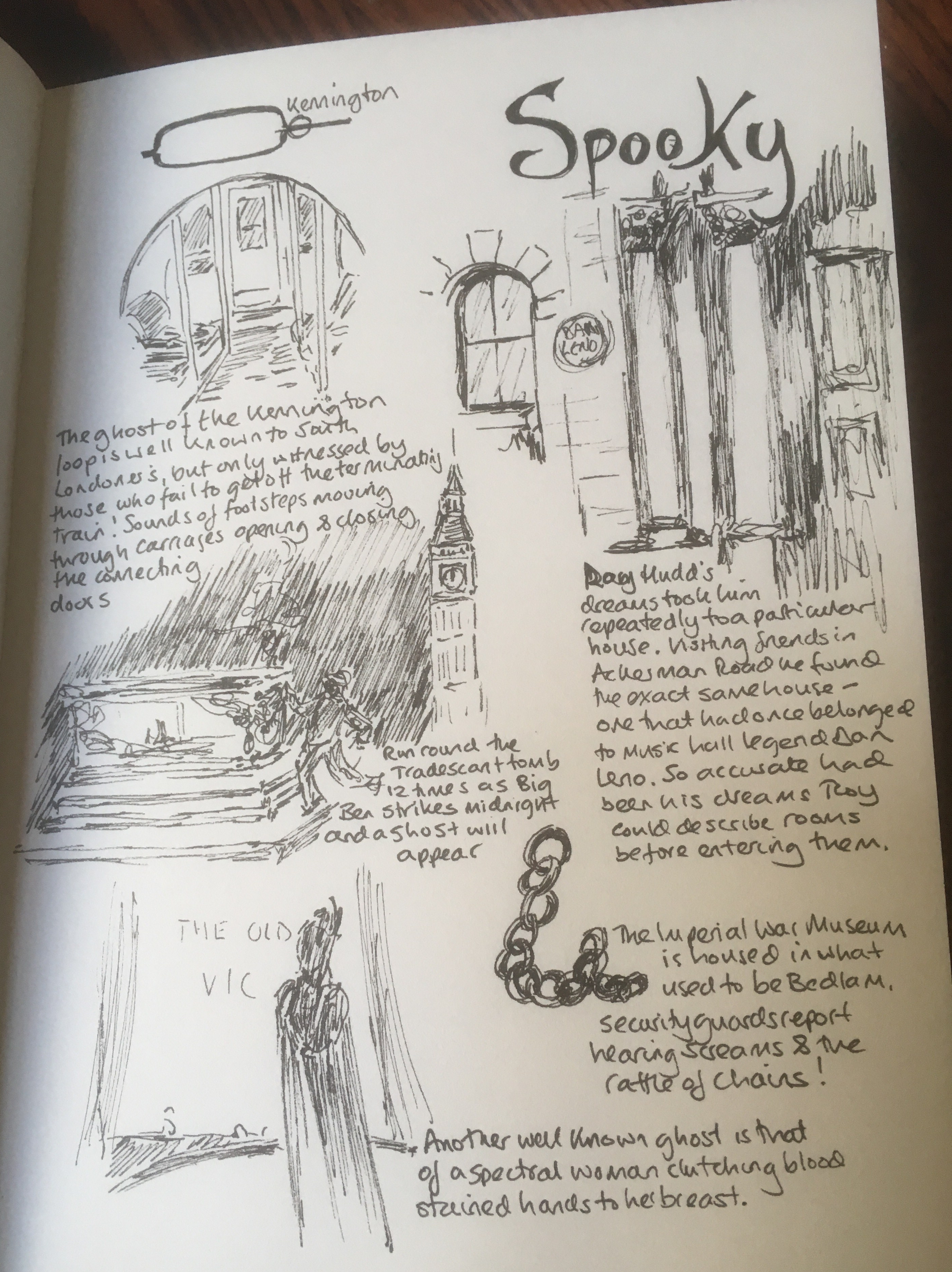
Posted as part of Inktober – October 2018 – part of my Pick and Choose History of Courtenay Street, Kennington and Lambeth:

img_1152.jpg

Spooky Lambeth for Halloween. Featuring two of Cheryl Newey’s favourite south london ghosts – the ghost of the Kennington Loop and the ghost of the Old Vic! The ghost of the Kennington Loop is well known as a story for South Londoners, but only those who fail to get off the terminating train will have experienced it. As it goes into the loop sounds of footsteps are heard moving through the carriages opening and closing the interconnecting doors – so remember when they say ‘all change’ – get off the train! I discovered a fascinating story about the entertainer Roy Hudd – he had a recurrent dream in which he walked up to and then into the same house over and over – he could describe the place in detail, but it wasn’t until he visited some friends living in Ackerman Road in Brixton that he discovered that the house was real and had once been the home of fellow performer, music hall legend, Dan Leno. So precise had been his dreams that Roy could describe each room before he entered it. There is a Lambeth legend that if you run twelve times round the Tradescant tomb (now in the Garden Museum’s garden – once the parish churchyard) whilst Big Ben strikes midnight, a ghost will appear. Sadly I only found this out after Big Ben was silenced for maintenance. Working the occasional late shift for weddings I would have had opportunity to try this out. Ah well, just 5 years to wait! The Imperial War Museum is housed in what used to be Bedlam (the main London insane asylum) and it is said that security guards report the sounds of screams and rattling chains. The Old Vic has, appropriately, a female ghost. She is seen clutching blood stained hands to her breast – whether this is the means of her demise or just a reprise of her best performance as Lady M has yet to be determined – perhaps a job for the Most Haunted team and Dennis Acora? This is just a small selection of the many fun ghosts and hauntings of Lambeth! (I’ve even had my own poltergheist but now exorcised).

Cheryl added the following comment to the original post:

“Spooktastic!! There’s also Lilian Bayliss and Emma Conns at the Old Vic. Apparently, the aroma of frying sausages can sometimes be smelled in the auditorium during a performance, and it’s said that it’s Ms Bayliss enjoying the show and cooking her favourite supper!”


Posted in Uncategorized | Leave a comment

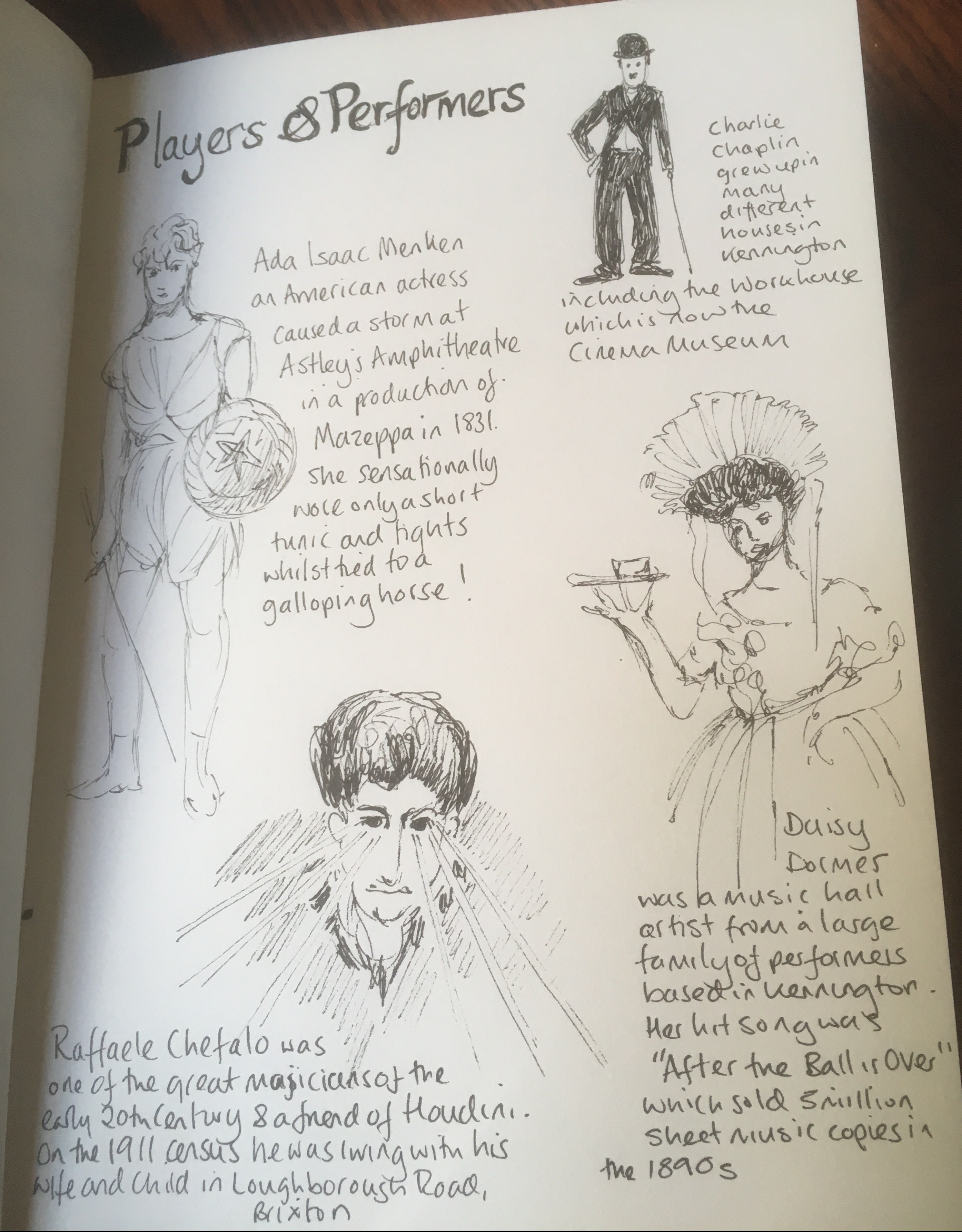
Players and Performers

Posted as part of Inktober in October 2018 – part of my Pick and Choose History of Courtenay Street, Kennington and Lambeth

img_1151.jpg

Players & Performers. There may be a second part to this! There are many players and performers from Lambeth but here are a small selection: Charlie Chaplin famously lived at many different addresses in Kennington, including the workhouse – the building is now the Cinema Museum which is threatened with closure – do please sign the petition here to help keep it open! Here

Back in 1831 American actress Ada Isaac Menken caused a storm in the production ‘Mazeppa’ dressed only in a short tunic and flesh coloured tights she was tied to a galloping horse! Daisy Dormer was a music hall artiste married into a large family of performers based in Kennington – her big hit was the song ‘After the Ball is Over’ which went on to sell 5 million sheet music copies in the 1890s! (there is a block of flats named after her in Brixton).

You can here it here

Raffaele Chefalo was one of the great musicians of the early 20th century and a friend of Houdini. On the 1911 census he was living with his wife and child in Loughborough Road, Brixton.

Posted in Uncategorized | Leave a comment